Introduction: The Day Analytics Turned a Chatbot Into a Growth Engine
A founder told me something unforgettable:
“Our chatbot wasn’t broken.
We just weren’t measuring the right things.”
For months, his chatbot looked “fine.” Conversations were happening. Replies were going out. But customer complaints were rising, and conversions were flat.
The turning point came when he opened the analytics dashboard for the first time.
He discovered:
- 41% of users were dropping off after the second message,
- key intents like “pricing” and “refunds” were not recognized,
- the bot was slow during peak hours,
- and human handover was happening at the wrong moments.
Fixing just two of these issues increased conversions by 32% in 30 days.
This is why chatbot analytics is not optional—it’s your unfair advantage.
Below are the 5 most important chatbot metrics you must track to build a high-performing AI chatbot in 2025, with benchmarks, diagrams, stories, and actionable insights.
Chatbot Metrics Benchmark (2025)
| Metric | Industry Benchmark | High-Performer Standard |
|---|---|---|
| Response Time | < 2 seconds | < 1 second |
| Resolution Rate | 60–75% | 80–90% |
| Conversion Rate | 5–10% | 15–25% |
| Engagement Rate | 20–35% | 40–55% |
| Handover Accuracy | 65–75% | 85–95% |
Source: Gartner CX Automation Study 2025—AI agents now handle up to 40% of all customer interactions.
1️⃣ Conversation Volume & Engagement Rate
The first sign that your chatbot is actually working.
Most businesses launch a chatbot and assume it’s doing its job. But the real question is:
“Are people actually engaging with it?”


What to track
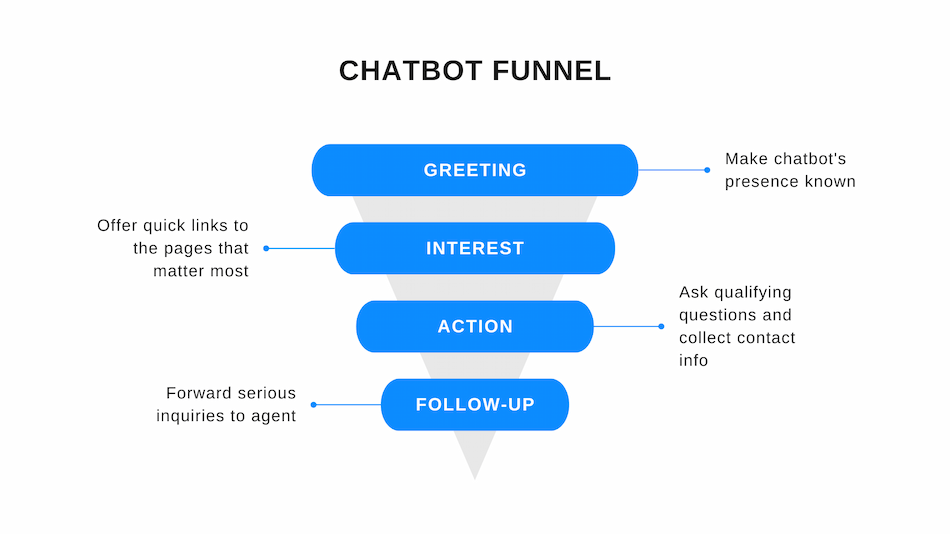
- Total conversations
- Engagement rate (how many users reply after first message)
- Drop-off points (1st message, 2nd message, final step)
- High-traffic pages that trigger chats
Founder Insight
“We didn’t realize our bot was losing customers right at the payment step until we saw the drop-off chart.”
Why it matters
A strong engagement rate means:
- your bot’s opening message works
- your placement strategy is correct
- proactive triggers are effective
Action Tip (BERT-Optimized Phrase)
Add contextual micro-prompts like:
“Need help choosing a plan?” or “Have a quick question?”
These can increase engagement 3×.
2️⃣ Resolution Rate (Self-Service Success Rate)
The metric that determines whether your chatbot reduces workload—or adds to it.
Resolution rate answers the big question:
“How often does the chatbot solve the problem without human help?”
What to track:
- Fully resolved issues
- Partially resolved issues
- Escalations to agents
- Failed intent recognition
Founder Quote
“Our bot wasn’t bad—it just didn’t understand real customer language. Updating our intents changed everything.”
Why it matters:
A high resolution rate means:
- lower support volume
- faster replies
- higher CSAT
- reduced operational cost
Example:
A wellness brand improved their resolution rate from 54% → 82% simply by adding 15 missing intents customers were repeatedly searching for.
3️⃣ Response Time & Handling Time
Speed = trust. Speed = satisfaction. Speed = conversion.
Speed is not a “technical metric.”
It’s an emotional one.
Customers feel slow responses immediately.


What to track:
- Bot response time (should be < 1s for AI bots)
- Average handling time (AHT)
- Latency during traffic spikes
Why it matters:
A 3-second delay can increase abandonment by 20–30%.
Founder Insight
“We lost sales every evening because our bot slowed down during peak traffic. Analytics made this visible.”
Action Tip
Keep prompts, workflows, and API calls lightweight.
Most performance issues are intent design problems, not server problems.
4️⃣ User Intent & Query Analysis
This is the closest you will ever get to reading your customers’ minds.
Every chatbot conversation is a source of insights your website analytics cannot show.
Track:
- Top user intents
- “Failed intents” (bot didn’t understand)
- New, trending questions
- High-volume search terms
Why it matters:
Intent data helps you improve:
- product pages
- pricing clarity
- onboarding
- support documentation
- marketing campaigns
Example:
A salon discovered 30% of chatbot searches were for “bridal packages,” a service they didn’t showcase.
Adding a dedicated page increased bookings dramatically within weeks.
Founder Quote
“Intent analytics revealed what customers wanted before we even offered it.”
5️⃣ Conversion Rate (Your Business North Star Metric)
This tells you whether your chatbot is generating real business value.
Conversion rate varies by industry, but the goal is always the same:
Turn conversations into outcomes.
Track conversions like:
- lead captures
- bookings
- product purchases
- email/SMS opt-ins
- cart recovery completions
- upsells
Why it matters:
AI agents that proactively guide customers drive 15–25% conversion lifts.
Example:
A coaching platform added a flow:
“Let me help you choose your plan in 30 seconds.”
Conversions jumped from 7% → 24%.
Founder Quote
“The moment we added proactive nudges, the bot went from ‘nice-to-have’ to ‘revenue-generating.’”
📊 Combined Dashboard — What a High-Performing Chatbot Looks Like
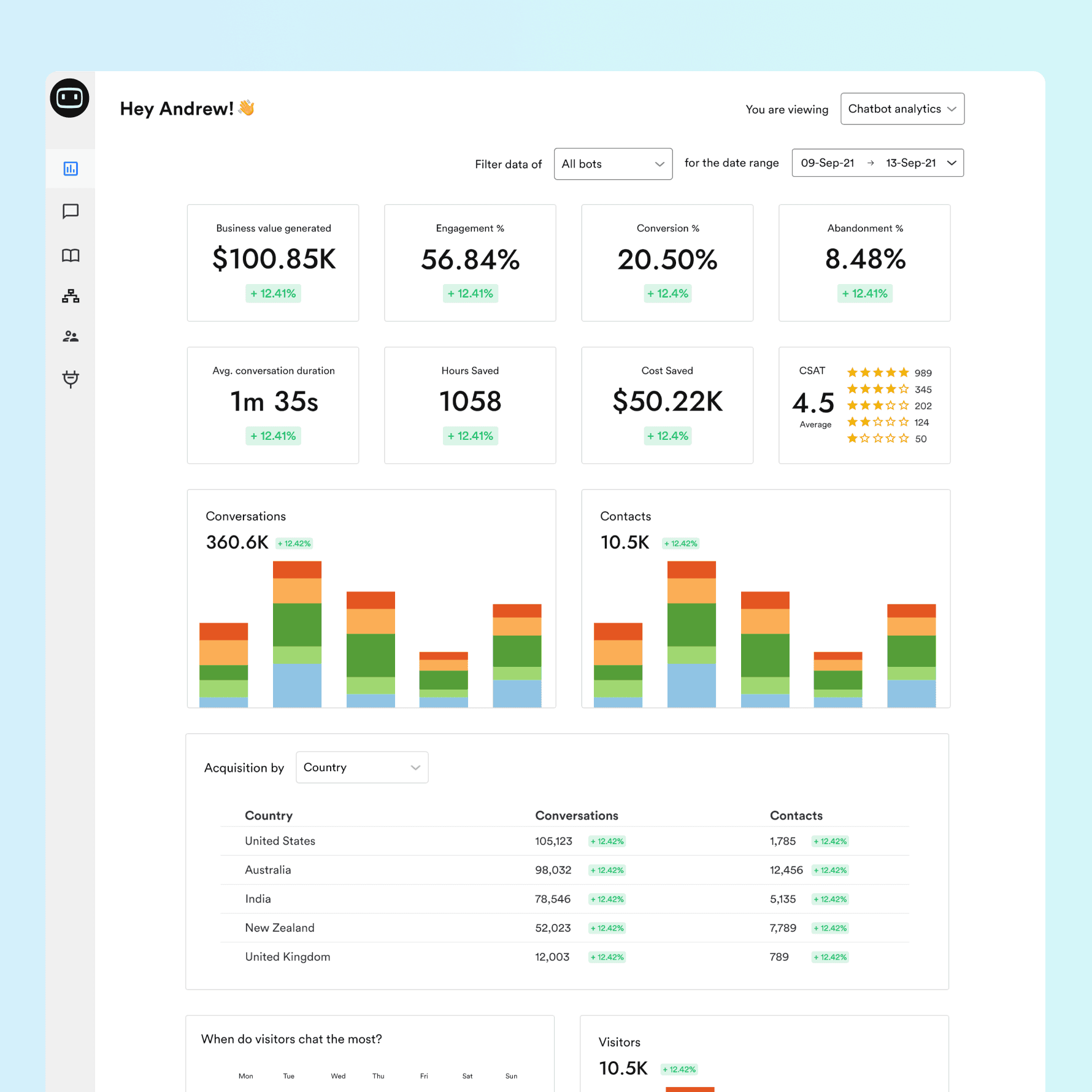


A complete analytics dashboard should show:
- Engagement funnel
- Intent performance
- Response time
- Resolution accuracy
- Conversion attribution
- Human handover quality
- Customer sentiment
This lets you diagnose issues within minutes instead of months.
Summary Table — 5 Metrics That Predict Chatbot Success
| Metric | Why It Matters | Good Benchmark |
|---|---|---|
| Engagement Rate | Shows if bot is attracting users | 40–55% |
| Resolution Rate | Measures real impact | 70–90% |
| Response Time | Directly affects satisfaction | <1s |
| Intent Accuracy | Prevents drop-offs | 85–95% |
| Conversion Rate | Measures ROI | 15–25% |
Conclusion — A Smarter Chatbot Starts With Smarter Analytics
Most chatbots don’t fail because of bad AI.
They fail because no one measures:
- where users drop off
- which intents are missing
- where speed breaks
- what customers really want
- which conversations convert
If you track these 5 essential metrics, your chatbot will transform from a simple assistant into a predictive, revenue-driving AI agent.
FAQ: Chatbot Analytics Metrics (2025 Edition)
1. What are chatbot analytics and why do they matter?
Chatbot analytics refer to the performance data generated from user interactions, including engagement rate, resolution rate, response time, and conversion performance. These metrics help businesses understand how effectively their chatbot is handling queries, reducing workload, and driving revenue.
2. Which chatbot metrics are the most important to track?
The five essential metrics to track in 2025 are:
1️⃣ Conversation Volume & Engagement Rate
2️⃣ Resolution Rate
3️⃣ Response Time
4️⃣ Intent & Query Analysis
5️⃣ Conversion Rate
These metrics indicate overall chatbot performance, customer satisfaction, and business impact.
3. What is a good engagement rate for a chatbot?
A strong engagement rate typically falls between 40–55%. This means nearly half of all users who see the chatbot interact with it — a sign of effective placement, messaging, and proactive triggers.
4. What is a good chatbot resolution rate?
Industry benchmark: 60–75%
High-performing AI assistants: 80–90%
A higher resolution rate means your bot is independently solving customer issues without needing human support.
5. How fast should a chatbot respond?
An ideal AI chatbot should respond in under 1 second.
Anything longer can increase drop-offs and reduce trust. Most customer abandonments happen when response time exceeds 2–3 seconds.
6. What is intent analysis in chatbot analytics?
Intent analysis identifies what users are trying to achieve when they interact with your bot — for example, asking about pricing, booking, refunds, product details, or troubleshooting.
It helps improve your chatbot’s content, FAQs, workflows, and UX.
7. How do chatbots impact conversion rates?
AI chatbots can boost conversions by 15–25% when they help users:
- choose a product/service
- recover abandoned carts
- find pricing
- complete bookings
- navigate the website
Effective proactive nudges significantly increase leads and sales.
8. What causes chatbot drop-offs?
Common reasons include:
- Slow response time
- Missing intents
- Confusing or repetitive replies
- Poor handover to human support
- Overly long flows
- Bot appears at the wrong point in the journey
Fixing these issues can reduce drop-offs by 20–40%.
9. How often should chatbot performance be reviewed?
For best results, analyze chatbot metrics weekly, not monthly.
Weekly reviews help catch:
- new trending queries
- broken flows
- sudden traffic spikes
- intent failures
- seasonal behavior changes
10. What tools can be used to track chatbot analytics?
Most AI chatbot platforms offer built-in analytics, but you can also integrate:
- Google Analytics
- Mixpanel
- Amplitude
- Heatmap & session replay tools
- Custom BI dashboards
Advanced use cases may require combining chatbot logs with CRM or support platforms.
11. How do I improve my chatbot’s resolution rate?
You can increase resolution accuracy by:
- Adding missing intents
- Expanding knowledge base answers
- Training the bot with real chat transcripts
- Improving clarity of prompts
- Optimizing fallback responses
- Reducing ambiguous or broad questions
12. What benchmarks should I use to measure chatbot success?
| Metric | Strong Benchmark (2025) |
|---|---|
| Response Time | <1 second |
| Resolution Rate | 80–90% |
| Engagement Rate | 40–55% |
| Conversion Rate | 15–25% |
| Intent Accuracy | 85–95% |
These standards help determine whether your bot is underperforming or operating at a high level.
13. Can chatbot analytics help improve website content?
Absolutely. User questions reveal gaps in:
- product descriptions
- pricing pages
- onboarding instructions
- feature explanations
- support articles
Many businesses update their website based on recurring chatbot queries.
14. How do proactive chatbot prompts affect analytics?
Proactive triggers (like “Need help choosing a plan?”) can increase:
- engagement by 3–7×
- conversions by 15–30%
- session duration
They also reduce support load by guiding users early.
15. What is the biggest mistake companies make with chatbot analytics?
The biggest mistake is treating analytics as optional.
Without tracking engagement, intent, or resolution rate, businesses end up with a chatbot that “talks a lot but solves very little.”